For years, the relationship between Siri and the apps on your iPhone has felt a bit like a conversation through a closed door. You could ask Siri to do basic things—send a text, set a timer, or play a song—but the moment you needed it to perform a complex task inside a third-party app, the system often hit a wall.
However, the landscape of mobile artificial intelligence is shifting rapidly. With the upcoming development of iOS 27, rumors and industry trends suggest that Apple is working on a fundamental shift in how Apple Siri interacts with the world. The goal? A seamless ecosystem where AI apps and the system’s native voice assistant finally speak the same language.
In this deep dive, we’ll look at the practical evolution of Siri, the technical logic behind “Siri Extensions,” and what this means for the everyday user experience.
Why Siri Needs a Bridge to Third-Party AI Apps
In real-world use, most iPhone users have experienced the “handoff” frustration. You ask Siri to perform a task in a specialized app, and instead of doing it, Siri simply opens the app and leaves you to finish the job manually.
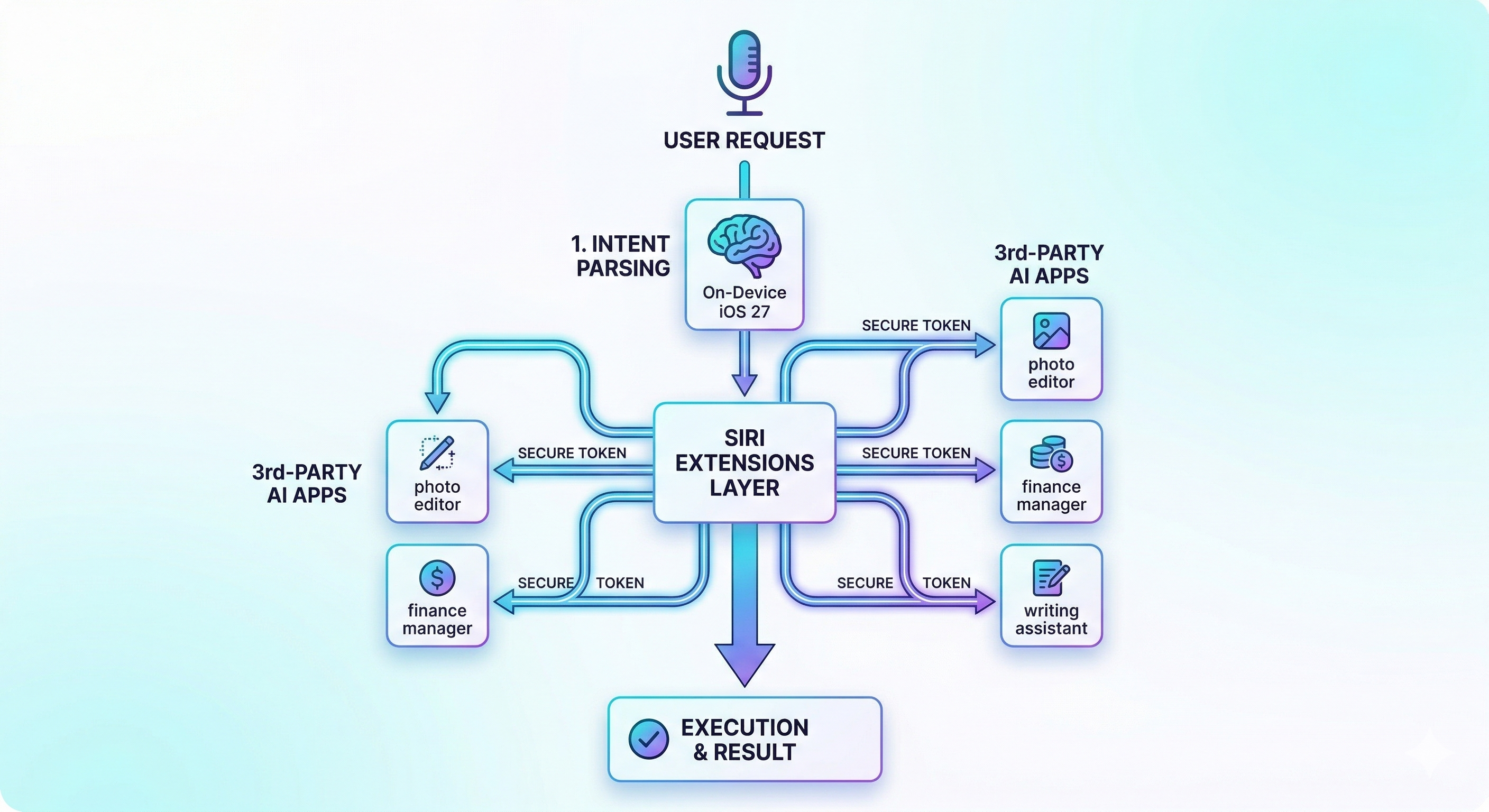
As generative AI and Large Language Models (LLMs) have become mainstream, the gap has become more obvious. Apps now have their own “brains”—specialized AI tools for photo editing, professional scheduling, or fitness coaching. For Siri to remain relevant, it can no longer act as a standalone gatekeeper. It needs to act as a coordinator.
From practical experience, a digital assistant is only as good as its integrations. If iOS 27 introduces a more robust framework for extensions, it would allow Siri to “borrow” the intelligence of other apps to complete complex requests.
Understanding the Concept: What Are Siri Extensions?
To understand where Apple is likely heading, we have to look at the logic of “Extensions.” In the world of software, an extension is essentially a permission slip. It allows one piece of software to plug into another without sharing all its private data.
With the rumored updates in iOS 27, these extensions would likely function as a standardized communication layer.
How it Works in Theory:
- The Request: You tell Siri, “Use [App Name] to summarize my meeting notes from this morning.”
- The Handshake: Instead of Siri trying to read the notes itself, it sends a secure “token” to the third-party AI app.
- The Execution: The third-party app processes the request using its specific AI model and sends the result back to Siri.
- The Result: Siri speaks or displays the summary without you ever having to leave the interface you were in.
This step-by-step process moves Siri from being a “search engine with a voice” to a true “system controller.”
The Shift Toward an Open AI Ecosystem on iPhone
Historically, Apple has been known for its “walled garden” approach. This kept things secure and simple, but it also limited functionality. However, the rise of specialized AI apps has changed the game. No single company can build the best AI for every niche—writing, coding, medical research, and creative design all require different models.
Many users notice that they now use three or four different AI tools throughout the day. By opening up Siri to connect with these external tools in iOS 27, Apple isn’t just improving Siri; they are making the iPhone the central hub for the entire AI industry.
Why Developers Are Excited
For developers, this is a massive win. Currently, if a developer builds an incredible AI-powered travel assistant, they have to fight to get users to open their app. With deeper integration, that app becomes a “feature” of the phone itself. If Siri can call upon that app’s logic to book a flight or organize an itinerary, the app provides more value to the user with less friction.
Privacy: The “Apple Way” of Connecting AI
One of the biggest hurdles in connecting Apple Siri to external AI apps is privacy. How do you let Siri talk to a third-party AI without giving that app access to your entire life?
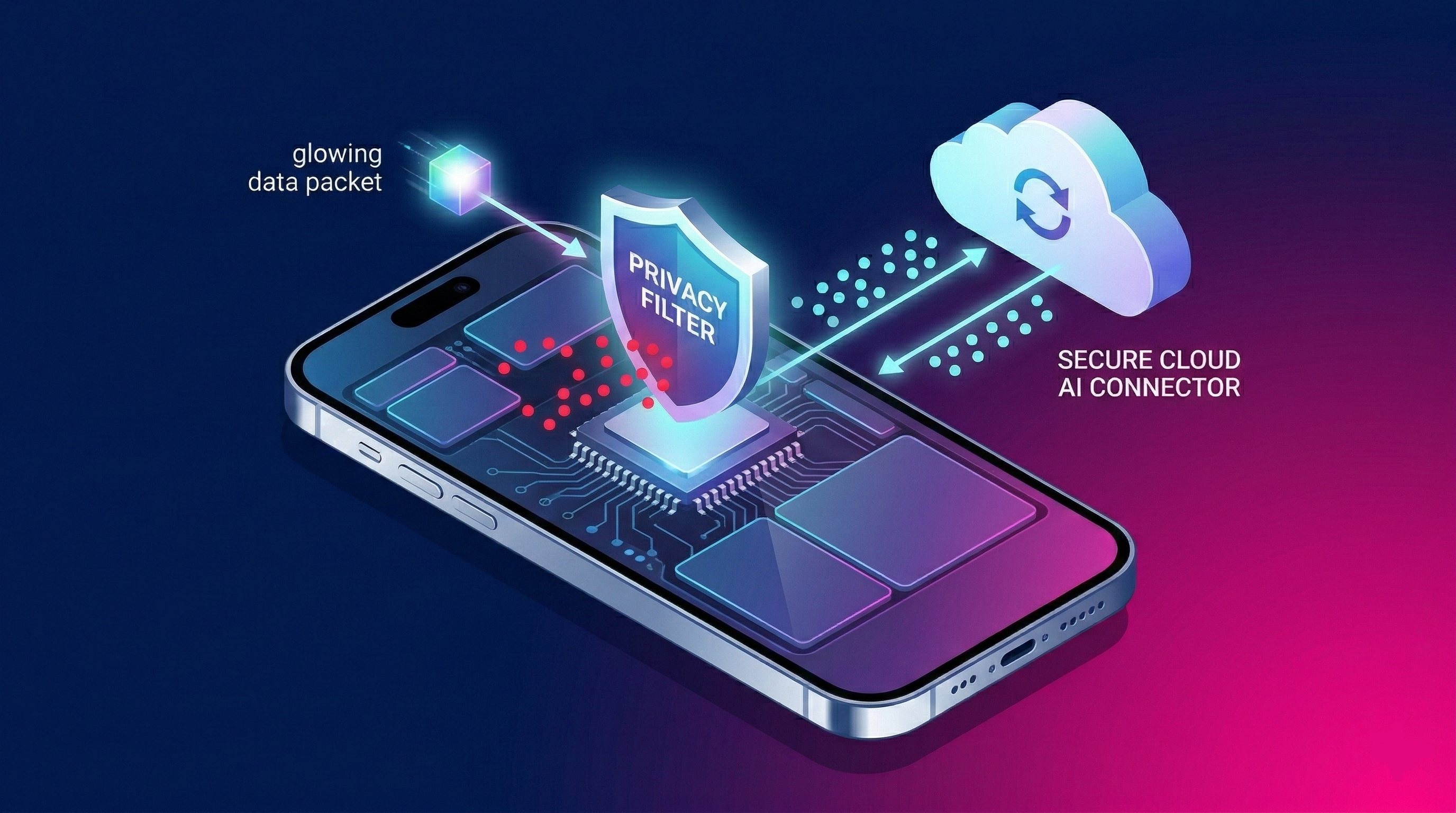
From a logical reasoning perspective, Apple is likely to use “On-Device Processing” as the filter. We expect iOS 27 to handle the intent of your request locally. The system will figure out what you want to do first, then strip away your personal identifiers before sending the necessary data to the third-party extension.
This “privacy-first” bridge is what will likely set iOS 27 apart from competitors. It ensures that while your apps are getting smarter, your personal data isn’t being auctioned off to the highest bidder.
Practical Examples: How Your Daily Life Might Change
It’s easy to talk about “extensions” and “frameworks,” but what does this actually look like on a Tuesday morning?
1. Enhanced Creative Workflows
Imagine you are using a professional photo editing app. Instead of navigating through five menus to “remove the background and brighten the subject,” you could simply say, “Siri, use [Photo App] to clean up this last photo.” The extension allows Siri to trigger those specific AI tools inside the app instantly.
2. Smarter Financial Management
Managing budgets often requires jumping between banking apps and spreadsheets. With the proposed changes in iOS 27, you could ask, “Siri, ask [Budget App] how much I’ve spent on groceries compared to last month.” The AI in the budget app does the math, and Siri gives you the answer.
3. Integrated Health and Fitness
Wearable tech and health apps generate mountains of data. A Siri extension could allow you to ask for insights that require deep analysis: “Siri, based on my data in [Fitness App], what’s the best time for me to run today to avoid overtraining?”
The Role of On-Device Intelligence vs. Cloud AI
A major theme we see in modern tech is the balance between speed and power. Apple Siri has traditionally leaned toward on-device processing for speed and privacy. However, some AI apps require massive cloud-based servers to function.
In iOS 27, we will likely see a hybrid model. Siri will handle the “common sense” tasks on your iPhone’s chip, but when you trigger an extension for a high-level AI task, it will manage the secure connection to the cloud. This ensures that the iPhone doesn’t slow down, even when performing incredibly complex calculations through external apps.
Improving the “User Intent” Engine
For these extensions to work, Siri has to get much better at understanding intent. We’ve all had the experience where Siri misunderstands a simple name or place. To connect with a library of AI apps, the system needs to be near-perfect at parsing human language.
Logical reasoning suggests that iOS 27 will include a significantly upgraded “Intent Engine.” This is the part of the software that decides: “Does the user want me to do this, or do they want [App B] to do this?”
If you say “Send a message,” Siri knows to use iMessage. If you say “Generate a professional email draft about a project delay,” Siri should recognize that it needs to call on a specialized writing AI app. This level of discernment is the “secret sauce” that will make or break the next generation of iOS.
What This Means for the Future of SEO and Apps
As an SEO editor, it’s interesting to note how this changes the way we interact with information. If Siri becomes a conduit for other apps, “search” begins to happen inside the voice interface rather than on a browser.
For users, this means a more conversational world. For developers, it means that the “discoverability” of their AI tools will depend on how well they integrate with Apple’s ecosystem. The better your app’s Siri Extension, the more likely a user is to engage with your service.
Final Thoughts: A Smarter Siri for a Smarter iPhone
While we are still looking toward the future release of iOS 27, the trajectory is clear. The era of the “siloed app” is ending. We are moving toward a world where your phone’s operating system acts as a conductor for an orchestra of different intelligences.
By allowing AI apps to connect deeply with Apple Siri, Apple is acknowledging that the future of technology isn’t about who has the single best AI—it’s about who creates the best environment for all AI to work together.
In real-world use, this means less time clicking through menus and more time actually getting things done. It’s a shift from “How do I use this app?” to “Siri, get this done for me.” And that, ultimately, is the promise of a truly smart smartphone.