For decades, the barriers to adopting commercial robotics were incredibly high. If a business wanted to automate its warehouse or manufacturing floor, it had to endure a painful, traditional purchasing cycle. You would buy an expensive machine outright, hire specialized engineers to program it, spend months integrating it into your existing systems, and then pray it didn’t become obsolete before you saw a return on investment.
Today, that heavy, capital-intensive model is rapidly fading. Taking a page straight out of the software industry’s playbook, the hardware world has introduced a more flexible, accessible approach: Robotics-as-a-Service (RaaS).
From practical experience working with modern supply chains and production facilities, the shift toward subscription-based robotics is one of the most significant operational changes we’ve seen in recent years. But what does it actually look like in practice, and is it the right move for your business? Let’s break down how renting robots is changing the industrial landscape.
What Exactly is Robotics-as-a-Service (RaaS)?
At its core, Robotics-as-a-Service (RaaS) is a business model where companies lease robotic devices and their accompanying cloud-based software rather than purchasing the hardware outright.
Think of it the same way we think about software today. You don’t buy a physical CD to install an accounting program anymore; you pay a monthly subscription to access the software via the cloud. RaaS applies this exact concept to physical machines.
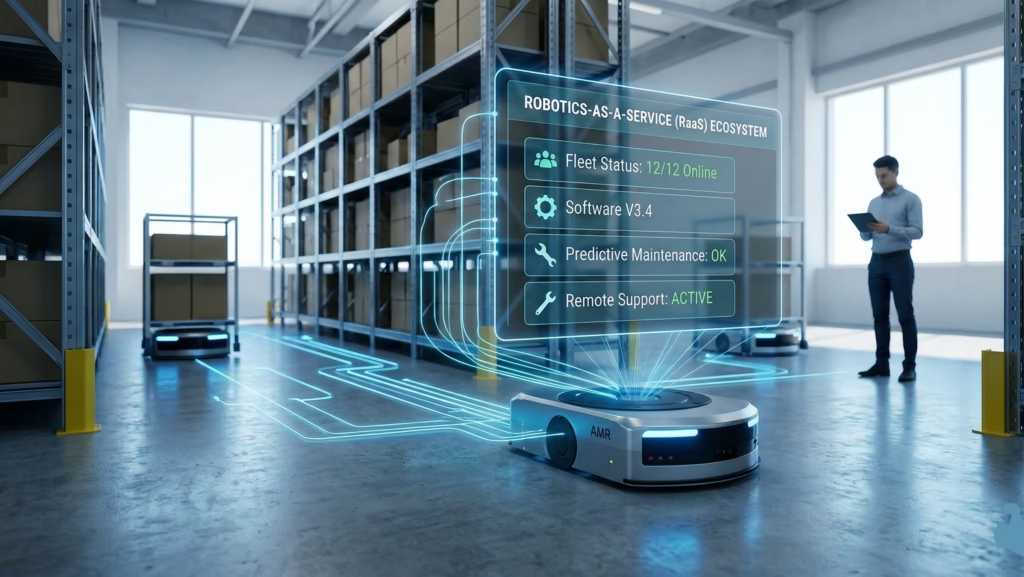
When a company signs a RaaS contract, they aren’t just getting a piece of metal delivered to their loading dock. They are subscribing to a holistic automation package. This typically includes:
- The physical robots (hardware).
- The fleet management system (software).
- Continuous firmware and AI navigation updates.
- 24/7 remote monitoring and teleoperation support.
- Routine and predictive maintenance.
The vendor retains ownership of the machines, which means the responsibility for keeping those machines running smoothly falls entirely on their shoulders, not on your internal IT or maintenance teams.
Why Companies Are Ditching Purchases for Subscriptions
Many operators wonder why they should pay a perpetual subscription instead of just buying an asset and owning it free and clear. In real-world use, the subscription model offers several massive advantages that align much better with how modern, agile businesses actually operate.
1. Shifting from CapEx to OpEx (No Massive Upfront Costs)
The most immediate benefit is financial. Buying a fleet of autonomous mobile robots (AMRs) or collaborative robotic arms (cobots) requires a massive Capital Expenditure (CapEx). We are often talking about hundreds of thousands, if not millions, of dollars before a single product is moved or assembled.
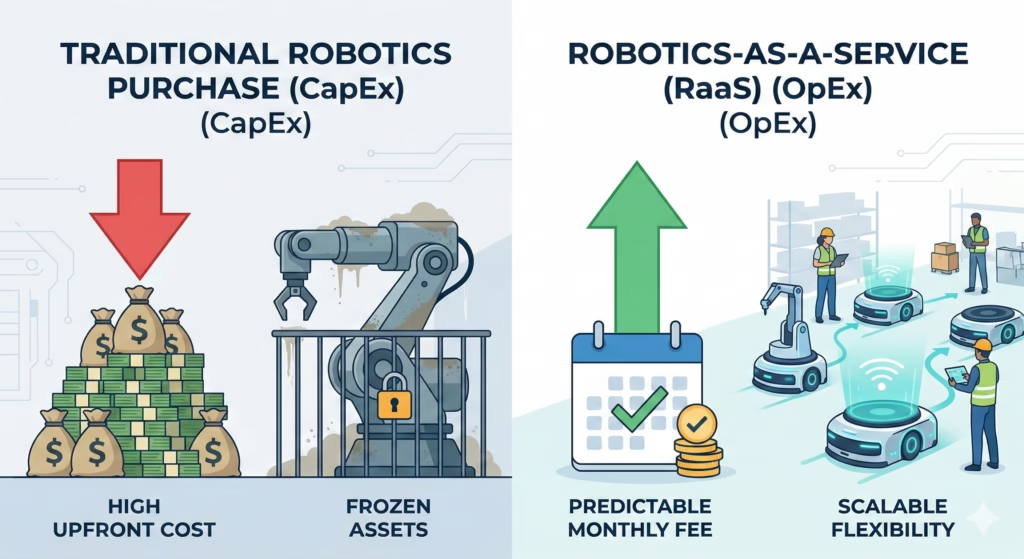
RaaS shifts this burden to an Operational Expenditure (OpEx). Instead of draining your cash reserves to buy equipment, you pay a predictable monthly or usage-based fee. This democratizes automation, allowing small to mid-sized enterprises (SMEs) to access the exact same cutting-edge robotics that the massive retail and logistics giants use.
2. True Scalability for Peak Seasons
If you run an e-commerce fulfillment center, your demand is rarely flat. You might process 5,000 orders a day in March, but jump to 50,000 orders a day during the Black Friday and holiday rush.
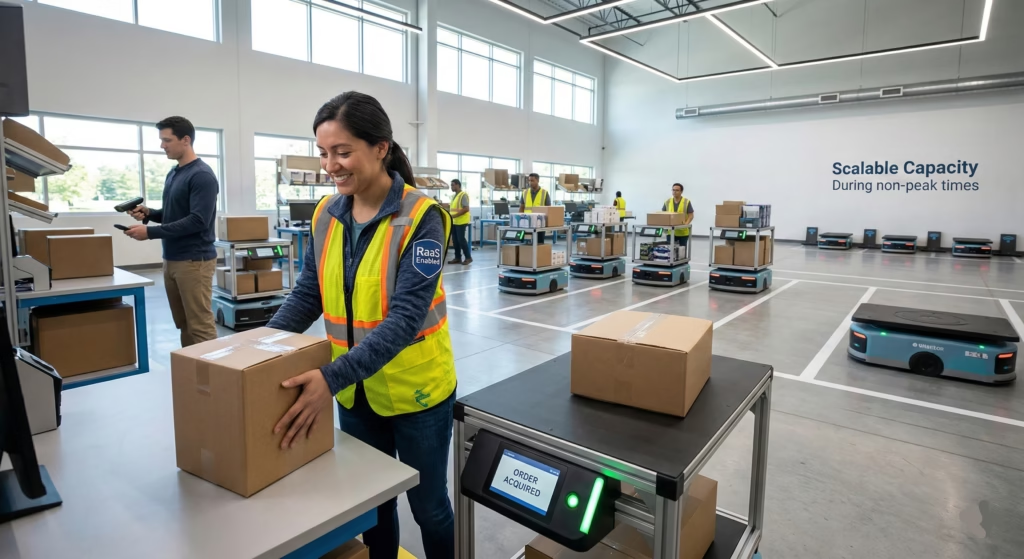
If you buy your robots, you have to purchase enough to handle your absolute peak volume. That means for nine months out of the year, dozens of expensive machines are sitting in a corner collecting dust. With a Robotics-as-a-Service (RaaS) model, scalability is built into the contract. Many users notice that the ability to temporarily scale up their fleet for Q4, and then return the extra units in January, completely transforms their profitability.
3. Eradicating the Risk of Obsolescence
Technology moves incredibly fast. A robotic vision system considered state-of-the-art three years ago might look sluggish and clumsy compared to today’s AI-driven models. When you own the hardware, you are stuck with aging technology. Because RaaS providers own the equipment, they routinely push over-the-air software updates to improve pathfinding, sensor accuracy, and battery management. When the hardware eventually reaches the end of its life, the vendor replaces it with a newer model, ensuring your facility is always operating with modern tools.
How the RaaS Business Model Actually Works
If you are considering integrating this technology, it helps to understand how the contracts and operations are actually structured.
Pricing Structures Providers generally offer a few different ways to pay, depending on the predictability of your workflow:
- Time-Based Leases: This is a flat monthly or annual fee per robot. It is predictable and easy to budget for, making it ideal for facilities with steady, year-round production.
- Pay-Per-Pick / Pay-Per-Task: This is a highly flexible, consumption-based model. You only pay for the actual work the robot successfully completes. If a robot moves a bin from an aisle to a packing station, you pay a micro-transaction for that specific action. If the warehouse has a slow day, your costs automatically drop.
Service Level Agreements (SLAs) and Predictive Maintenance Because you are paying for a service, uptime is guaranteed through an SLA. RaaS providers heavily utilize predictive maintenance. By constantly analyzing data from the robot’s sensors (motor temperature, battery degradation, wheel friction), the provider’s remote software can predict when a part is about to fail. They will dispatch a technician to replace a bearing or a battery before the machine breaks down, virtually eliminating unexpected operational downtime.
Where is RaaS Making the Biggest Impact?
While the concept sounds great on paper, where is it actually working in the real world?
Logistics, Warehousing, and Fulfillment
This is the most mature market for subscription robotics. Walk into any modern third-party logistics (3PL) facility, and you will likely see autonomous mobile robots (AMRs) navigating the aisles. Instead of human workers walking 10 miles a day pulling heavy carts, the RaaS bots navigate to the correct shelf, meet the human picker, and then transport the picked goods to the shipping dock. It saves time, drastically reduces employee physical fatigue, and speeds up order fulfillment.
Manufacturing and Production
On factory floors, RaaS is bringing “cobots” (collaborative robots) to the assembly line. Unlike massive, dangerous industrial arms that must be locked behind steel cages, cobots are designed with advanced sensors to work safely right next to humans. A manufacturer might rent a cobot to handle highly repetitive tasks—like tightening screws, applying glue, or performing visual quality inspections—freeing up human workers to handle more complex, problem-solving tasks.
Healthcare and Institutional Settings
Hospitals are vast complexes where moving things from point A to point B takes up a massive amount of staff time. RaaS models are now deploying delivery robots in hospitals to autonomously transport linens, daily meals, and even laboratory samples through the corridors. Because hospitals operate on strict budgets, paying a monthly service fee for automated delivery is much easier to get approved than a multimillion-dollar robotics infrastructure upgrade.
The Hidden Challenges: What to Know Before Adopting RaaS
While the benefits are clear, implementing a subscription robotics model is not without its hurdles. It is important to look at this transition realistically.
Integration Can Still Be a Headache Just because the financial model is easy doesn’t mean the software integration is effortless. Your facility likely relies on an existing Warehouse Management System (WMS) or Enterprise Resource Planning (ERP) software. The RaaS provider’s cloud system must seamlessly communicate with your internal software to know what tasks to assign. If your legacy software is outdated, building the API connections to make the robots “smart” can take time and IT resources.
Facility Environment Requirements Robots need a pristine environment to navigate successfully. If your warehouse has major Wi-Fi dead zones, heavily damaged concrete floors, or aisles that are constantly cluttered with debris, even the most advanced AI navigation will struggle. Before deploying a fleet, you often have to upgrade your facility’s wireless network and enforce stricter housekeeping rules.
Vendor Lock-In Once your operations are fully dependent on a specific vendor’s robotic ecosystem, switching to a competitor can be highly disruptive. You are trusting this partner with a critical piece of your daily throughput. Thoroughly vetting the vendor’s financial stability, support responsiveness, and SLA guarantees before signing a multi-year contract is absolutely vital.
Final Thoughts
The transition toward Robotics-as-a-Service (RaaS) is fundamentally changing who can afford to automate. By lowering the barrier to entry, removing the burden of maintenance, and offering unprecedented flexibility, subscription models are allowing smaller businesses to punch above their weight class and compete with industry giants.
If your business struggles with labor shortages, highly seasonal demand spikes, or the need to increase throughput without taking on massive debt, exploring a RaaS partnership might be the smartest operational upgrade you can make this year. As long as you carefully manage the software integration and ensure your facility is prepped for automation, the ability to simply “rent the future” is an opportunity too powerful to ignore.