
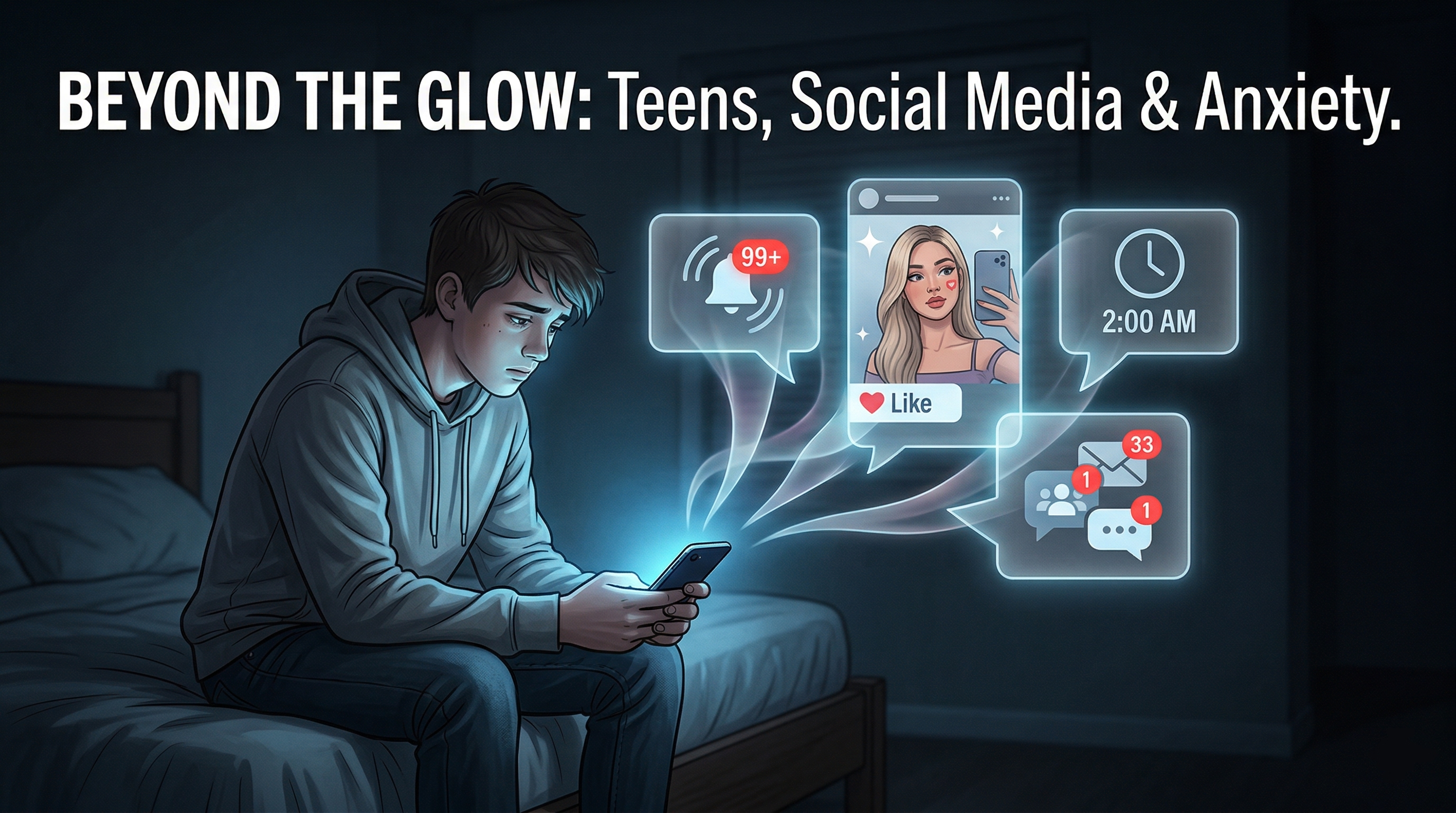

Walk into almost any family living room today, and you will likely see a familiar sight: a teenager bathed in the soft glow of a smartphone screen, their thumb swiping upward in a rhythmic, almost unconscious motion. To an outsider, it looks like harmless entertainment. But beneath the surface of funny videos, trending dances, and perfectly filtered photos lies a complex digital ecosystem that is fundamentally reshaping how young people grow up.
Understanding the true social media effects on teens goes far beyond simply arguing that kids spend too much time on their phones. It requires us to look closely at how these platforms are designed, how they interact with a developing brain, and why they so frequently become a source of profound daily stress.

As parents, educators, and guardians, we often find ourselves navigating uncharted territory. From practical experience, we know that simply banning technology isn’t a realistic long-term solution. Instead, we need to understand the mechanics of the digital world to help young people build healthier relationships with their screens.
The Silent Shift in Teenage Communication
To grasp why these platforms are so impactful, we first have to recognize how teenage socialization has evolved. A few decades ago, the teenage social experience was largely confined to school hallways, local parks, or the shopping mall. When you came home and closed your front door, the social pressure generally stopped. You had a sanctuary.
Today, that sanctuary no longer exists. The social environment follows teenagers into their bedrooms, buzzing in their pockets twenty-four hours a day. Socializing has moved from a physical space to a digital stage, where every interaction can be measured, recorded, and publicly scrutinized.
Many users notice that this constant connectivity removes the natural “downtime” the human brain needs to recover from social interactions. When a teenager is always reachable, they are also always “on duty” socially, which naturally elevates their baseline stress levels.
Unpacking the Core Social Media Effects on Teens
When we talk about the impact of these platforms, we are usually looking at a combination of several different psychological pressures overlapping at once. Here is a step-by-step breakdown of how these effects typically manifest in everyday life.
The Endless Cycle of Comparison Culture
Perhaps the most universally recognized issue is the comparison trap. Social media feeds are highly curated highlight reels of other people’s lives. When teenagers scroll, they are not seeing the mundane or difficult moments of their peers; they are seeing the best angles, the most exciting vacations, and the most flawless (and often digitally altered) appearances.
In real-world use, a teenager sitting alone in their room on a Friday night might open an app and immediately see ten of their peers at a party they weren’t invited to. The brain processes this not just as information, but as social rejection. Constant exposure to these idealized realities can heavily distort a young person’s self-image, making them feel as though they are constantly falling behind in a race they didn’t even know they were running.
The “Always On” Pressure and FOMO
Fear Of Missing Out (FOMO) is not a new concept, but social media has amplified it to an intense degree. Platforms are designed to show users exactly what is happening in real-time.
Furthermore, many apps feature read receipts, active status indicators, and “streaks” that require daily interaction to maintain. This creates a hidden obligation. If a teenager doesn’t respond to a message immediately, they may worry about offending a friend. This creates a relentless cycle of checking and responding, ensuring they never truly disconnect.
Disrupted Sleep and the Late-Night Scroll
From practical experience working with families, sleep deprivation is one of the most immediate and visible fallouts of unchecked screen time. The blue light emitted by phones suppresses melatonin production, making it harder for the brain to transition into sleep mode.
But it is not just the light; it is the content. Scrolling through emotionally stimulating content—whether it’s an exciting video, a stressful news story, or a dramatic group chat—keeps the mind racing. A teenager who stays up until 2 AM scrolling is going to wake up exhausted, irritable, and far less equipped to handle the normal challenges of the school day.
Why Anxiety Thrives in the Digital World
The connection between heavy screen time and rising anxiety is something mental health professionals and parents are witnessing globally. But why does an app on a phone translate to physical feelings of panic, a racing heart, or chronic worry?
The answer lies in how these platforms hijack the brain’s reward system. Every time a teenager receives a notification, a “like,” or a new follower, their brain releases a tiny hit of dopamine—a chemical associated with pleasure and reward. It feels good. However, when the notification is ignored, or when a post doesn’t get the expected engagement, that dopamine drops.
This creates an emotional rollercoaster. Teenagers begin to subconsciously tie their self-worth to their digital metrics. The anxiety stems from the unpredictability of it all. They post a photo and wait, feeling tense about how it will be received. They send a message, see that it has been read, and wait anxiously for the reply dots to appear.
Over time, this constant state of high-alert hyper-vigilance exhausts the nervous system. The brain begins to interpret digital interactions as real-world survival threats, triggering a genuine fight-or-flight anxiety response over something as simple as a misunderstood text message.
The Broader Picture of Teen Mental Health
It is crucial to look at this issue holistically. Social media is rarely the sole cause of poor mental health, but it acts as a massive amplifier for existing insecurities and developmental challenges.
The teenage brain is essentially under construction. The areas responsible for processing social rewards and peer approval are highly active, while the prefrontal cortex—the area responsible for long-term planning, impulse control, and rational perspective—is still developing. This biological reality makes teenagers uniquely vulnerable to the intense social feedback loops of the internet.
When you combine a developing brain with an algorithm designed to keep users engaged at all costs, it is easy to see why emotional regulation becomes so difficult. Recognizing this helps us shift our perspective from blaming the teenager for “being addicted to their phone” to understanding that they are navigating a highly engineered system that preys on their natural social instincts.
Practical Strategies for Navigating the Digital World
If you are a parent or guardian trying to help a teenager navigate this landscape, it is easy to feel overwhelmed. However, there are highly effective, practical steps you can take to foster a healthier environment. The goal is not to eliminate technology, but to build boundaries that protect their well-being.
Set Boundaries Without Banishing the Phone
Many parents notice that suddenly confiscating a phone often backfires, leading to secrecy and resentment. Instead, work collaboratively to set boundaries. Discuss why these rules are being implemented. A common and highly successful approach is creating designated tech-free zones in the house, such as the dinner table or the car. This forces natural breaks in connectivity and encourages face-to-face interaction.
The Power of the “Digital Sunset”
Because sleep is so critical to emotional regulation, establishing a “digital sunset” is one of the most impactful changes a household can make. Require all devices to be plugged in to charge in a central location—like the kitchen or a hallway—at least an hour before bedtime. Removing the physical temptation of the phone from the bedroom guarantees that the teenager actually unplugs, allowing their brain to wind down naturally.
Curating a Healthier Feed
Encourage teenagers to perform a “social media audit.” Sit down with them and talk about how certain accounts make them feel. If following a particular influencer, celebrity, or even a peer consistently makes them feel bad about their body, their clothes, or their life, encourage them to hit the unfollow button.
Teach them that they have the power to curate their digital environment. They can fill their feeds with accounts that inspire them, make them laugh, or teach them new hobbies, rather than accounts that breed insecurity.
Modeling Healthy Behavior
Finally, we have to look in the mirror. Teenagers are incredibly perceptive, and they will naturally model the behavior of the adults around them. If a parent is constantly checking work emails during dinner or scrolling through their own feeds while having a conversation, the teenager will internalize that this is how adults interact with the world. By putting our own phones down, we silently give them permission to do the same.
Finding Balance in a Connected World
The reality is that social media is woven into the fabric of modern life. It is how this generation connects, shares ideas, and finds community. There is immense positive potential in these platforms when they are used intentionally.
However, ignoring the very real social media effects on teens is no longer an option. By understanding the mechanics of anxiety and the pressures of the digital landscape, we can stop reacting to the symptoms and start addressing the root causes. Through open conversations, firm but empathetic boundaries, and a focus on real-world fulfillment, we can guide young people toward a future where technology is a tool they use, rather than a tool that uses them.