
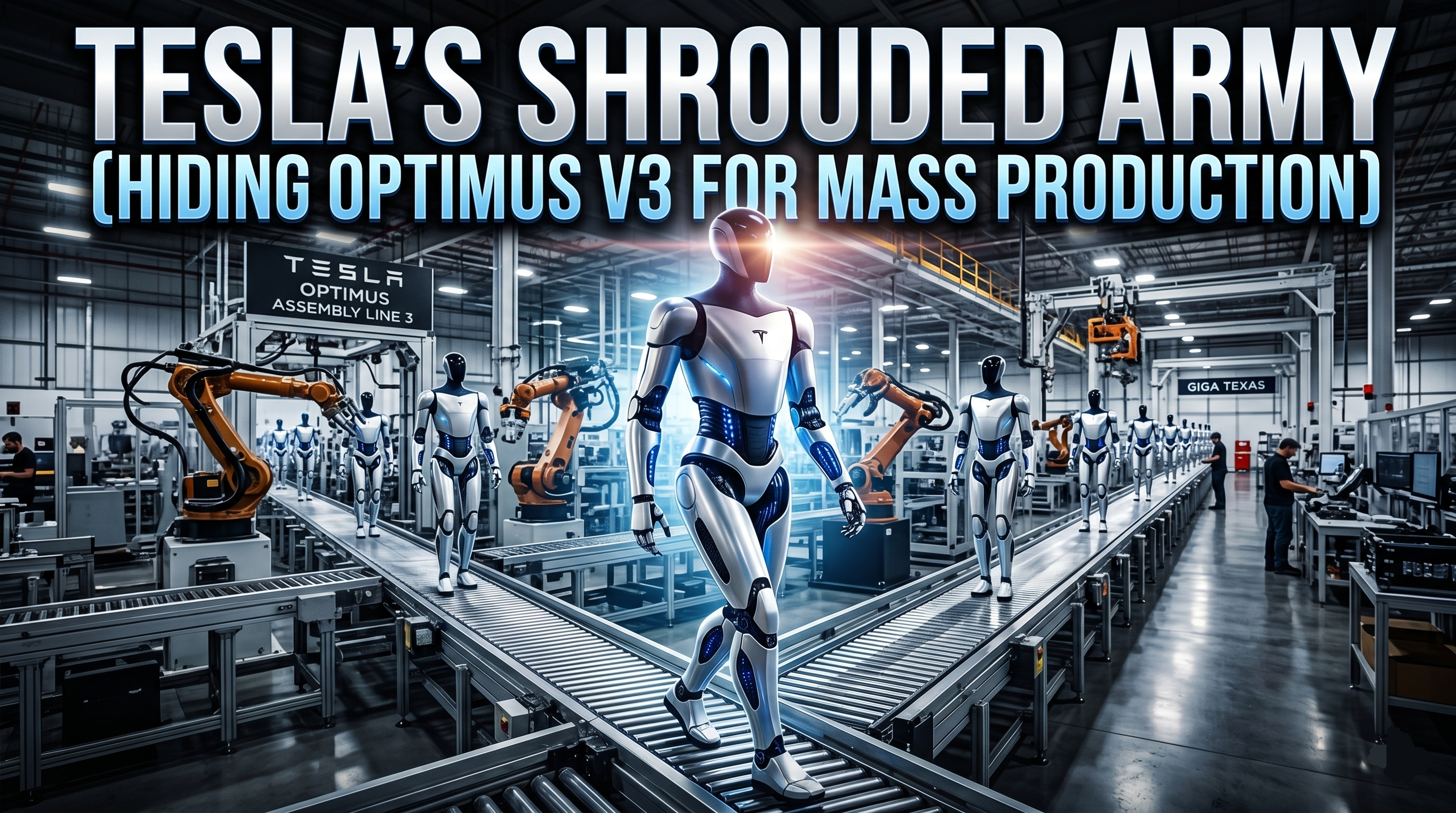

In the fast-paced world of consumer technology, the standard playbook usually involves endless hype, deliberate leaks, and highly publicized prototype demonstrations. Tech companies generally want you to see every shiny new component long before a product hits the shelves. However, when you look at the current development of advanced automation—specifically the latest iteration of the Tesla humanoid robot—that standard playbook has been completely thrown out the window.
Recently, there has been a noticeable shift in how much information is being shared with the public regarding these upcoming machines. Elon Musk and his engineering teams have deliberately pulled back the curtain, limiting high-definition demonstrations and technical deep dives as they get closer to actual factory production.
To understand why this strategic silence is happening, we have to look past the surface-level marketing and examine the sheer complexity of modern robotics, the threat of corporate espionage, and the massive manufacturing pivot currently underway.
Understanding the Shift to Extreme Secrecy
From practical experience covering the tech hardware sector, it is a known fact that hardware is notoriously difficult to protect from copycats. Software code can be encrypted, locked behind servers, and legally shielded by complex patents. Hardware, however, exists in the physical world. If you show a high-resolution video of a robot walking, lifting, or manipulating an object, competing engineers can analyze that footage frame-by-frame.
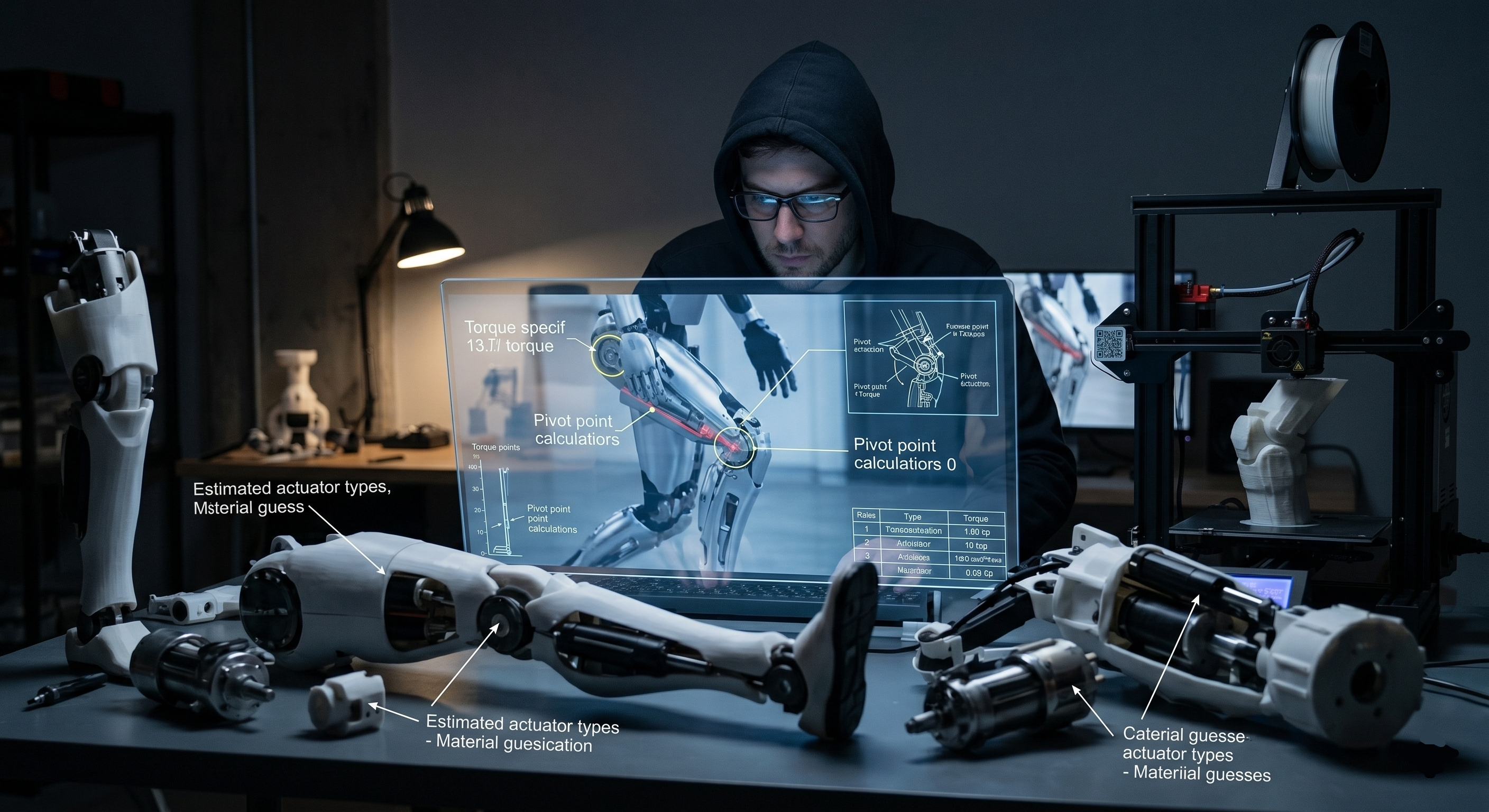
They can estimate the exact type of linear actuators being used. They can calculate the weight distribution, the joint tension, and the pivot points. By simply watching how a machine balances itself, a rival company can save millions of dollars in research and development, effectively leapfrogging the trial-and-error phase that the original creator had to endure.
Many industry observers notice that the humanoid robot space has become incredibly crowded over the last two years. Countless startups and established automation giants are racing to build the definitive general-purpose machine. Because of this fierce competition, keeping the specific mechanical and software advantages of the latest generation under wraps is no longer just a marketing choice; it is a vital business defense strategy. The less the competition sees, the harder it is for them to reverse-engineer the breakthroughs.
The Massive Manufacturing Pivot
Moving from building electric vehicles to manufacturing bi-pedal machines requires a fundamental rethinking of the assembly line. We are seeing major physical changes happening on the factory floors, particularly in places like the Fremont, California facility.
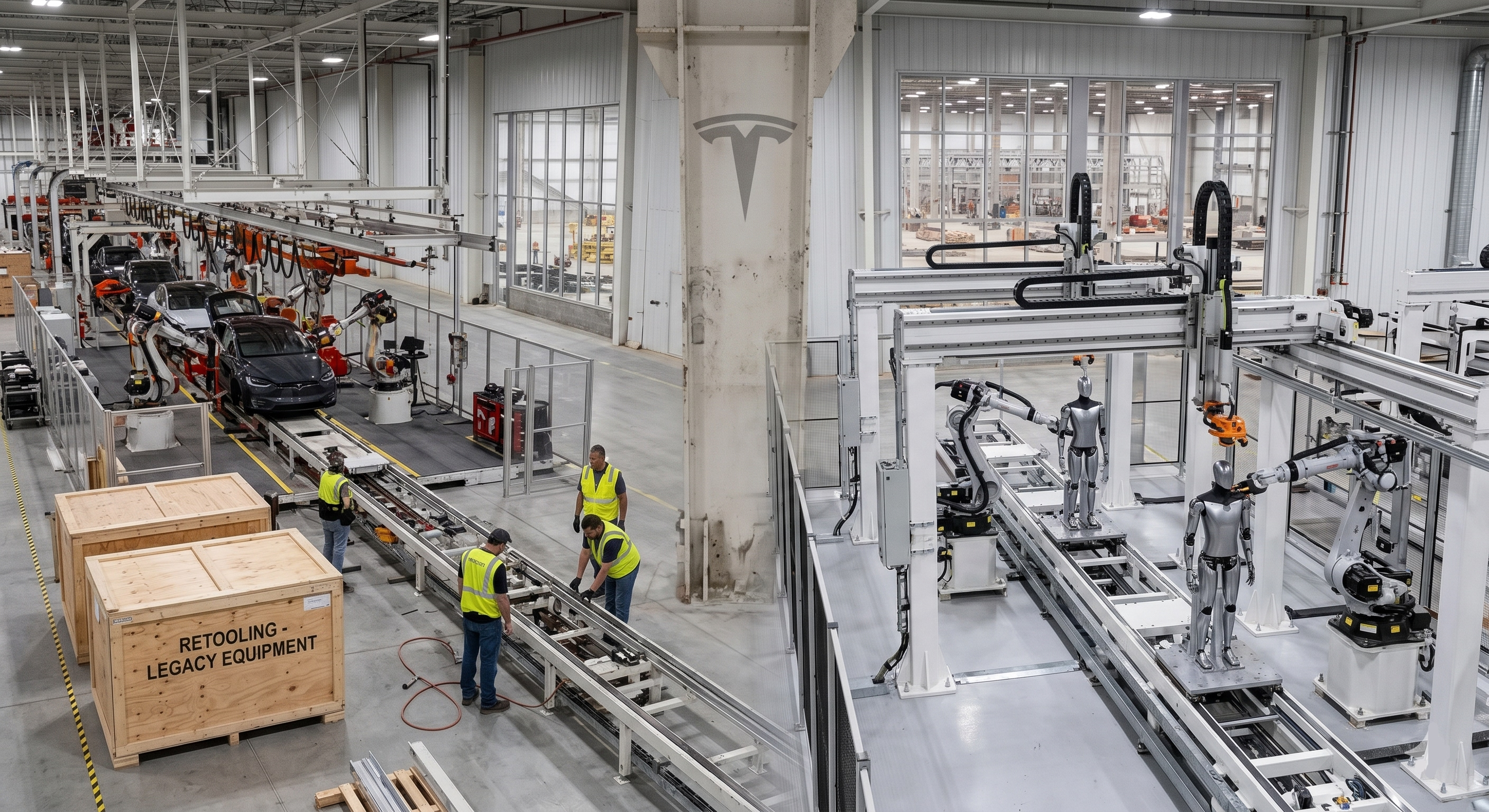
In real-world manufacturing, assembly lines are highly specialized. A production line built to assemble a luxury sedan is entirely useless for assembling a five-foot-eight robot. To make room for this new era of technology, legacy production lines—even those that previously manufactured popular vehicle models—are being dismantled and completely retooled.
This is not a weekend project. Stripping down heavy automotive machinery and replacing it with the precision tooling required to build delicate robotic joints and AI-powered vision systems is a complex transition that takes months.
The projected scale is what truly sets this endeavor apart. The long-term vision is not to build a few thousand novelty machines. The goal is mass production on an unprecedented scale, with initial facilities aiming for hundreds of thousands of units, and future expansions potentially scaling up to millions of units annually. This shift signals that the company views the robot not as a side project, but as the foundational pillar of its future business model.
The Factory Floor as the Ultimate Proving Ground
When we think about robots, popular media often pictures them walking down our streets or cooking in our kitchens. However, in real-world use, throwing a beta-stage machine into the chaotic, unpredictable environment of a public space is a logistical nightmare.
This is why the initial deployment of these robots will be strictly confined to factory operations. A factory is what engineers call a “structured environment.” The floors are flat, the lighting is consistent, and the layout can be perfectly mapped in three dimensions.
By utilizing their own massive manufacturing plants as the testing ground, the engineering teams can deploy the robots to handle repetitive, dangerous, or physically exhausting tasks. Whether it is sorting heavy automotive parts, moving bins across the warehouse, or holding components in place for human workers, the factory floor provides the perfect sandbox. It allows the development team to gather massive amounts of real-world physical data, refine the balance algorithms, and improve battery efficiency without the variables of weather, uneven sidewalks, or random pedestrians.
How the Onboard Intelligence Actually Works
One of the most critical aspects of modern robotics is how the machine “thinks.” Historically, many smart devices relied heavily on the cloud. They would capture data, send it to a remote server for processing, and wait for instructions to come back.
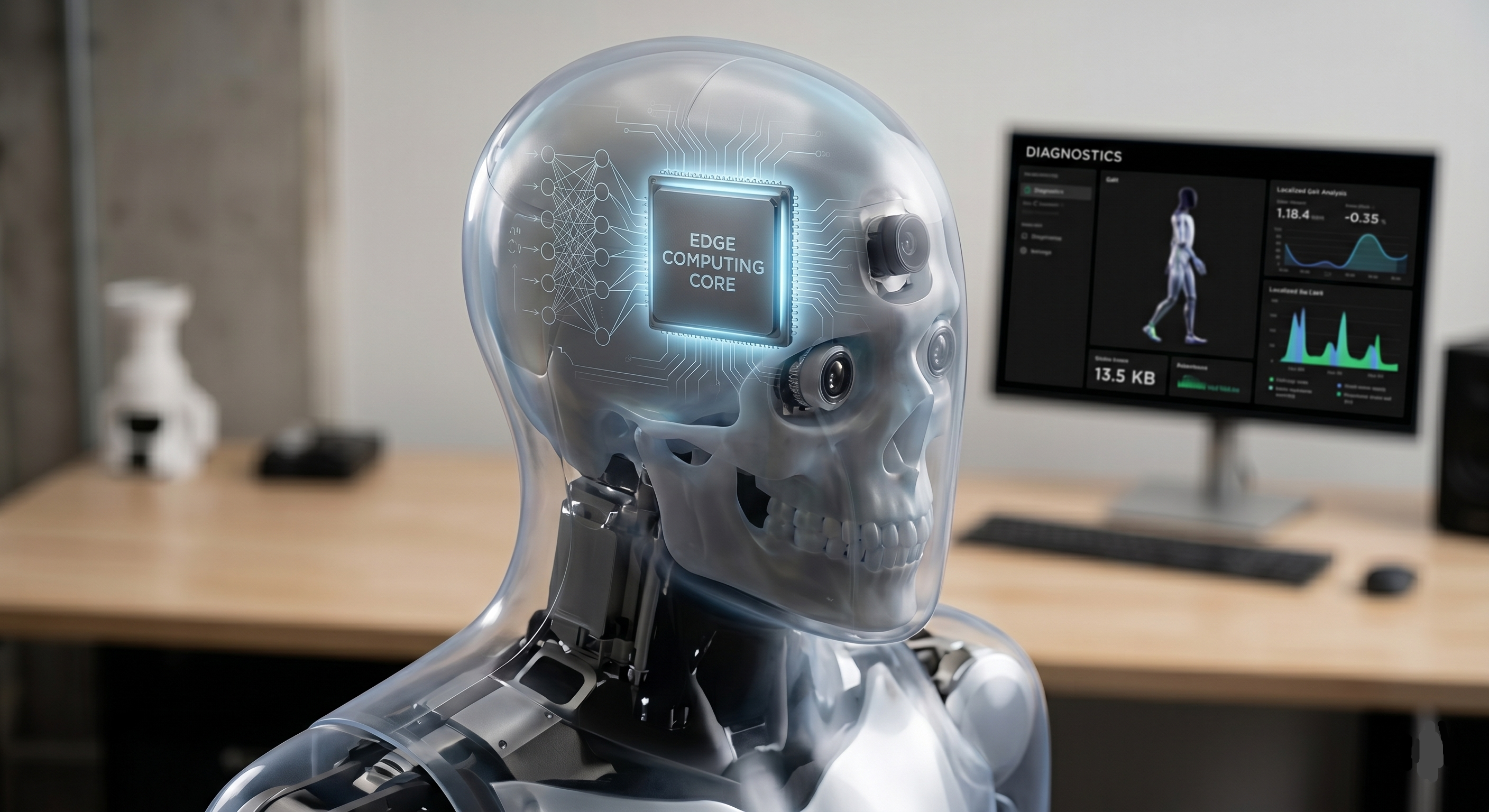
From practical experience with automated systems, relying on cloud computing for physical movement is incredibly dangerous. If a robot is carrying a fifty-pound sheet of metal and the Wi-Fi connection drops for even half a second, the results could be catastrophic.
To solve this, modern humanoid designs are prioritizing “edge computing”—meaning the artificial intelligence and processing power are physically located inside the robot’s own chassis. The machine uses localized neural networks to process visual data from its cameras and translate that into immediate physical movement. It does not need a constant internet connection to maintain its balance, recognize an obstacle, or safely lower a heavy object. The intelligence is self-contained.
The Concept of Orchestration AI
While the physical movements are calculated locally inside the robot, organizing a fleet of thousands of these machines requires a different kind of software network. This is where the concept of an “orchestration AI” comes into play.
Think of an orchestration AI like a highly efficient warehouse manager. The manager doesn’t manually move the boxes or tell the workers exactly how to place their feet when they walk. Instead, the manager looks at the big picture: “We have a shipment arriving at dock four, and we need these 500 parts moved to assembly line B.”
The orchestration AI acts as the brain of the facility. It communicates with the robots, assigns them overarching goals, and optimizes their routes so they don’t block each other in the aisles. Advanced language models and AI systems are being adapted to serve this exact managerial purpose. By treating the robots as a coordinated workforce rather than isolated tools, a factory can achieve a level of efficiency that traditional static machinery simply cannot match.
The Broader Implications for the Tech Industry
The aggressive push into robotics is fundamentally changing how we view legacy automotive companies. We are transitioning from an era of purely building transport vehicles to an era of generalized automation.
While exact timelines for public commercial availability remain fluid, the sheer speed of development is forcing the entire tech industry to adapt. Competitors are no longer just racing to build a better electric car battery; they are racing to solve the much harder problem of generalized artificial intelligence navigating the physical world.
Ultimately, the tight lid kept on the latest technological advancements is a testament to how high the stakes have become. We are on the verge of a massive shift in industrial labor, and the companies that manage to successfully marry physical mechanics with onboard AI will define the next century of manufacturing. Until these machines are officially rolling off the assembly line and into the workforce, expect the engineering details to remain a closely guarded secret.