
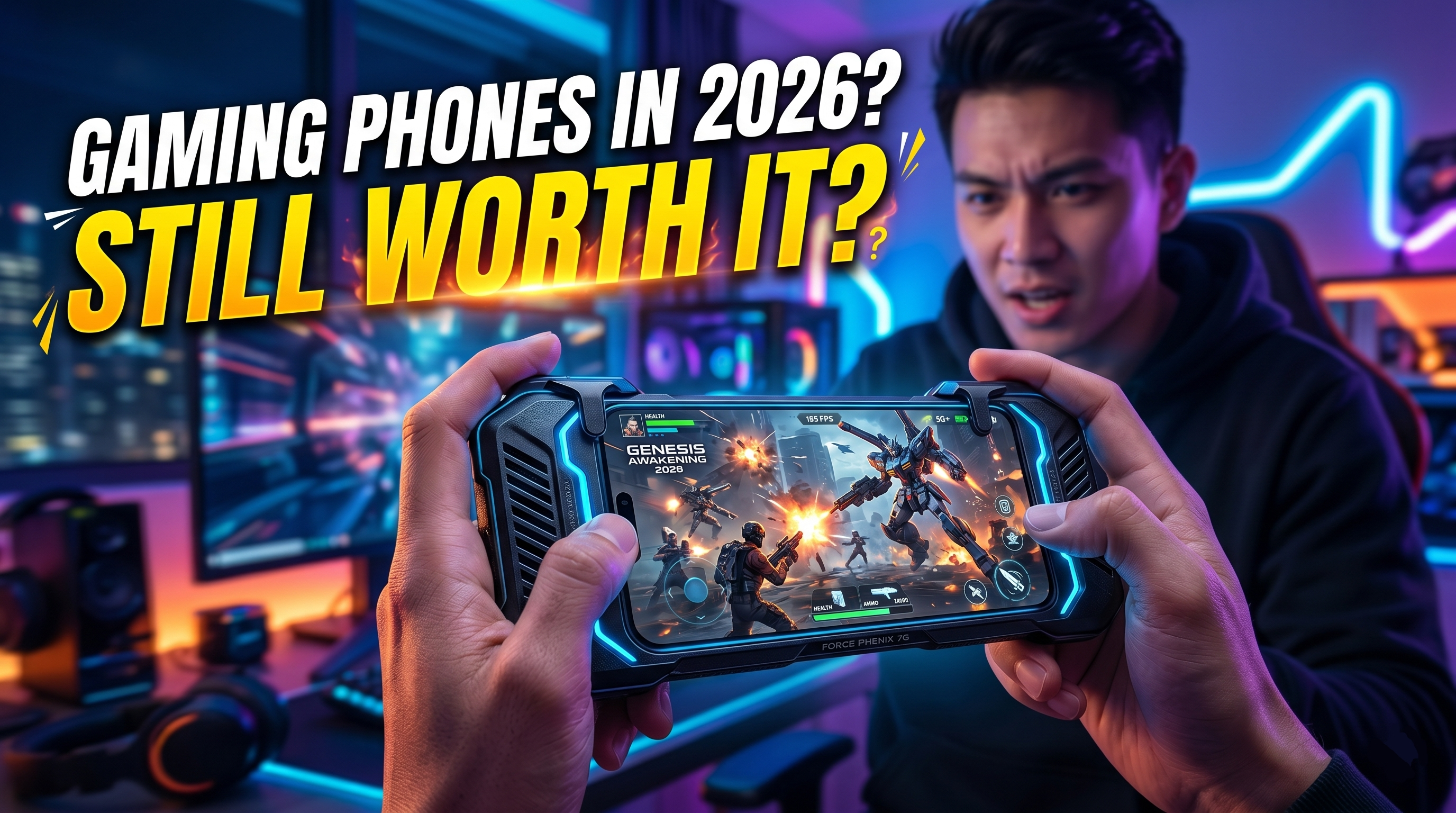

For the past decade, the mobile industry has followed a predictable cycle. Every year, processors get faster, screens get brighter, and “gaming phones” push the absolute limits of what we can fit into our pockets. But as we navigate through 2026, the conversation around the gaming smartphone has shifted.
It is no longer just about who has the most RAM or the flashiest RGB lights. Instead, the focus has moved toward sustainable performance, cooling innovation, and whether a specialized device offers a tangible advantage over a standard flagship. If you are a mobile enthusiast or a competitive player, understanding this landscape is vital before dropping a thousand dollars on a new handheld.
The Evolution of Mobile Gaming Power
In the early days of mobile gaming, the gap between a standard phone and a gaming-specific device was massive. If you tried to play a high-end title on a regular phone, it would likely overheat, dim the screen to save itself, and eventually start lagging (thermal throttling).
In 2026, that gap has narrowed, but it hasn’t disappeared. Modern mobile chipsets are incredibly efficient. From practical experience, we’ve seen that mainstream flagship phones can now handle most “AAA” mobile ports with ease. However, the gaming smartphone still exists for a specific reason: sustained peak performance.
While a standard flagship is designed for short bursts of speed (opening apps, taking photos), a gaming phone is built for the marathon. It’s the difference between a sprinter and a long-distance runner.
What Defines a Gaming Smartphone in 2026?
If you are looking at the market today, you’ll notice that these devices have moved away from the “edgy” gamer aesthetic and toward functional engineering. Here is what actually matters in the current generation of hardware.
1. Active Cooling Systems
Heat remains the number one enemy of mobile performance. Many users notice that after thirty minutes of intense gameplay, their frame rates begin to drop. Dedicated gaming devices solve this with internal fans, vapor chambers, and even peltier-cooling attachments. In the real world, this means you can play at 120fps for three hours straight without the device feeling like a hot coal in your hand.
2. Specialized Input and Ergonomics
One of the most significant advantages of a gaming-centric device is the inclusion of “shoulder triggers.” Whether they are ultrasonic sensors or physical pop-up buttons, they change the way you interact with complex games. Instead of cluttering your screen with four fingers (the “claw” grip), you can map your aim and fire buttons to the top of the frame. This physical feedback is something a standard glass slab simply cannot replicate.
3. Bypass Charging Technology
Battery health is a major concern for power users. A key feature we see in the 2026 gaming niche is bypass charging. This allows the phone to pull power directly from the wall to run the processor, skipping the battery entirely. This prevents the battery from heating up during play, significantly extending the lifespan of your device.
The Impact of High-Refresh-Rate Displays
We’ve reached a point where 120Hz is the standard for almost every mid-range phone. However, the gaming smartphone in 2026 has pushed the envelope further, often reaching 165Hz or even 240Hz touch sampling rates.
To the average user, the difference between 120Hz and 165Hz might be hard to spot. But from a competitive standpoint, it’s about latency. In high-speed shooters or rhythm games, every millisecond of input delay matters. These phones are tuned to respond to your touch faster than the human eye can process, providing a “snappiness” that makes the software feel like an extension of your hands.
Software Optimization: More Than Just a “Game Mode”
Many manufacturers claim to have a “Game Mode,” but on most phones, this just silences notifications. On a dedicated gaming device, the software integration goes much deeper.
In real-world use, these specialized operating systems allow you to:
- Manual Overclocking: Adjust CPU and GPU clock speeds based on the game’s requirements.
- Macro Support: Record complex sequences of touches for repetitive tasks.
- Network Prioritization: Direct all Wi-Fi or 5G data to the game to prevent “ping spikes.”
- Screen Mapping: Create custom layouts for games that don’t natively support controllers.
This level of granular control is what separates a “phone that can play games” from a “mobile gaming console.”
The “Standard Flagship” vs. The Gaming Specialist
A common question we hear is: “Why should I buy a gaming phone when the latest iPhone or Samsung Galaxy has a powerful chip?”
It’s a valid point. The processors in mainstream flagships are world-class. However, mainstream brands prioritize camera systems and thin designs. To keep a phone thin, they often sacrifice cooling.
From practical experience, a standard flagship will often hit its thermal limit after 20 minutes of a high-fidelity game like Genshin Impact or the latest Warzone mobile. Once it hits that limit, the software forces the brightness down and cuts the frame rate in half. A gaming smartphone is physically thicker because it houses the hardware necessary to prevent that from happening. You are essentially trading a “perfect camera” for a “perfect sustained framerate.”
Is Cloud Gaming Changing the Need for Hardware?
By 2026, cloud gaming services have matured significantly. With 5G becoming more stable and accessible, some argue that you don’t need a powerful local processor to play great games. You can simply stream them.
While cloud gaming is great for casual play, it doesn’t replace local hardware for two reasons:
- Latency: No matter how fast your internet is, there is a delay when sending inputs to a server hundreds of miles away. Local hardware will always be more responsive.
- Data Usage: Streaming high-definition games consumes massive amounts of data, which isn’t always feasible on a mobile plan.
For the serious player, having the “grunt” of a local GPU is still the gold standard.
Value and Longevity: A Practical Look
When we look at the value proposition in 2026, gaming phones often offer more “bang for your buck” in terms of raw specs. You will frequently find more RAM and storage in a $700 gaming phone than you would in a $1,100 “Ultra” flagship.
However, there is a trade-off. Historically, gaming phone manufacturers have been slower with Android OS updates compared to Google or Samsung. If you plan to keep your phone for five years, a mainstream flagship might be the safer bet. But if your priority is performance today and for the next 24 months, the specialized hardware wins.
Choosing the Right Device for Your Needs
Before you commit to a gaming smartphone in 2026, ask yourself what kind of player you are:
- The Competitive Player: If you play ranked matches in PUBG, Free Fire, or Mobile Legends, the triggers and high touch sampling are worth the investment.
- The “AAA” Enthusiast: If you like playing console ports with the highest graphics settings, the active cooling is a must-have.
- The Casual Player: If you mostly play Candy Crush, Wordle, or light strategy games, a gaming phone is likely overkill. A standard mid-range device will serve you better and save you money.
Conclusion: The Verdict on 2026 Mobile Gaming
The gaming smartphone has survived and thrived by carving out a niche that mainstream manufacturers refuse to touch. It isn’t just about “gaming” anymore; it’s about being a “Power User” device. These phones are for the people who want the biggest batteries, the fastest charging, the loudest speakers, and the best cooling.
In 2026, these devices represent the peak of mobile engineering. While they might not be the “best” phones for everyone—especially those who prioritize photography—they remain the undisputed kings of performance. If you want a device that never slows down, never dims its screen during a heatwave, and gives you physical tools to win your matches, the dedicated gaming phone is more relevant now than ever.
As mobile games continue to close the gap with PC and console titles, the hardware in our pockets must evolve to match. The gaming phone is no longer a gimmick; it is a specialized tool for a new generation of digital athletes and enthusiasts.